


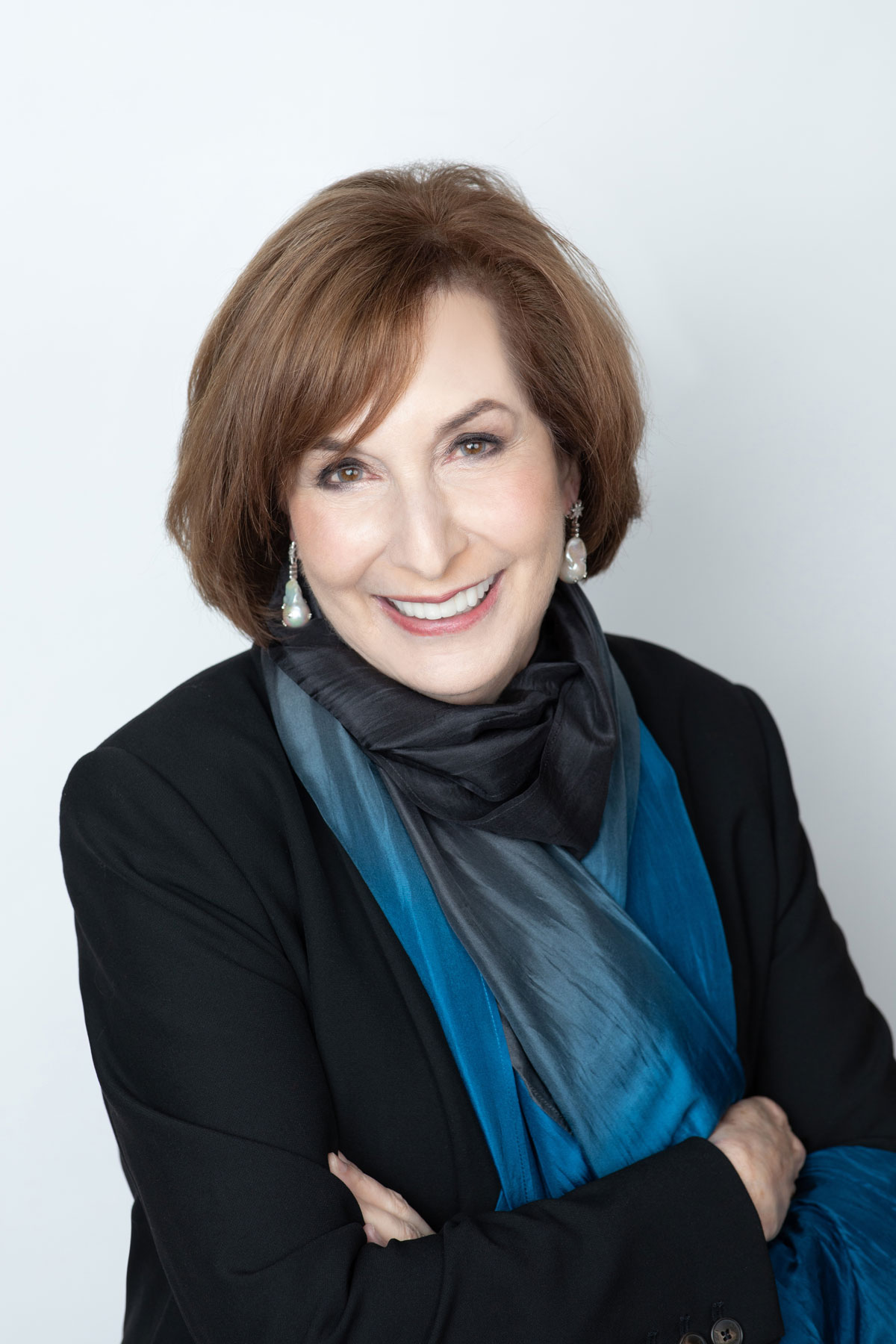
Sandra Sucher, professor of management practice at Harvard Business School, is an internationally recognized trust expert. She studies trust and how it can be managed —intentionally—as a business asset. Her research focuses on trust-critical challenges like building trust in the adoption of AI, during layoffs and restructuring, while navigating reputation threats, and following headline-level trust breaches. Sucher’s findings are broadly applicable to leaders managing persistent uncertainty.
Sucher is a member of the Edelman Trust Institute Advisory Board, advising them on Trust Barometer research. She has collaborated with Deloitte on trust measurement since 2019, and with PwC’s Leadership Trust Institute.
At Harvard, Sucher studies how companies become trusted and the vital role business leaders play in building and restoring trust. She has authored or coauthored 15 HBR articles, 110 business cases, technical notes, video interviews, teaching notes, and three books. The Power of Trust, her third book, is based on two decades of global research on how companies build stakeholder trust and how, if lost, they can restore it.
Sucher was a business executive for 20 years before joining Harvard. As a senior executive at Fidelity Investments, she measured customer loyalty, redesigned back-office operations, and improved the quality of service. In retailing, she helped build new businesses. Sucher has served on corporate and nonprofit boards and as Chair of the Better Business Bureau.
Sucher’s research has been featured in the Financial Times, Wall Street Journal, New York Times, Bloomberg, Barron’s, Forbes, Business Insider, CNBC, NPR, and Marketplace.
TRUST
Trust is the most powerful force underlying the success of every business. Yet it can be shattered in an instant, with a devastating impact on a company’s market cap and reputation. In this research, I help leaders understand how trust proves critical at moments of greatest stress for organizations. The research makes trust concrete and shows how leaders can manage trust as a business asset. The goal is not trust per se, but the benefits that result from being trusted by stakeholders. The research is grounded in my experience as an executive, in the case studies I develop on trust failures and successes in companies, and in my research on organizational and interpersonal trust. I introduced my research on trust in the “Big Idea” series for Harvard Business Review in 2019, and followed it in July 2021 with the publication of my third book, coauthored with Shalene Gupta, The Power of Trust: How Companies Build It, Lose It, Regain It (Public Affairs).
In The Power of Trust I describe the science behind trust—why we humans trust in the first place, and provide a framework—competence, motives, means, impact—to understand how customers, employees, community members and investors decide whether an organization or a leader can be trusted. The important insight is that other people decide whether to trust us or not, and the role of leaders and organizations is to act in ways that inspire trust and recover it when lost.
My research shows that creating and sustaining trust does not come from reputation-building and PR but by being the “real deal:” demonstrated through competence in creating products, services, and technologies that work, having good intentions, treating people fairly, and taking responsibility for all the impacts a company creates, whether intended or not. The research also corrects a common misperception: lost trust can, in fact, be regained. And it delves into the process of how to do this, including the essential art of delivering a trust-building apology.
My current research is focused on providing an answer to the question I am asked most often by executives and MBA students, “What, exactly, would I do differently if my goal was to be trusted?” I am developing playbooks for leaders on common trust-critical situations like building trust when adopting AI, during layoffs and restructuring, while navigating reputation threats, and following headline-level trust breaches. In Harvard Business Review in 2024 I take up the issue of “How Companies Should Weigh in on a Controversy.” In 2025, “How Leaders Can Build Stakeholder Trust in Uncertain Times.” And in 2026, I explore how “AI Adoption is Overloading Middle Managers.” This research will culminate in a new book on trust that provides practical, empirically tested playbooks on how leaders and managers from established companies to start-ups and side hustles can build trust at the times it matters most.
We all need joy in our lives. Here are some things I’m interested in outside of business that I wanted to share—a whole new world of entertainment!